How to Financially Prep for a New Year That Aligns With Your Values

Stacy Peterson • January 2, 2026

Cheers to 2026 being aligned with our values!
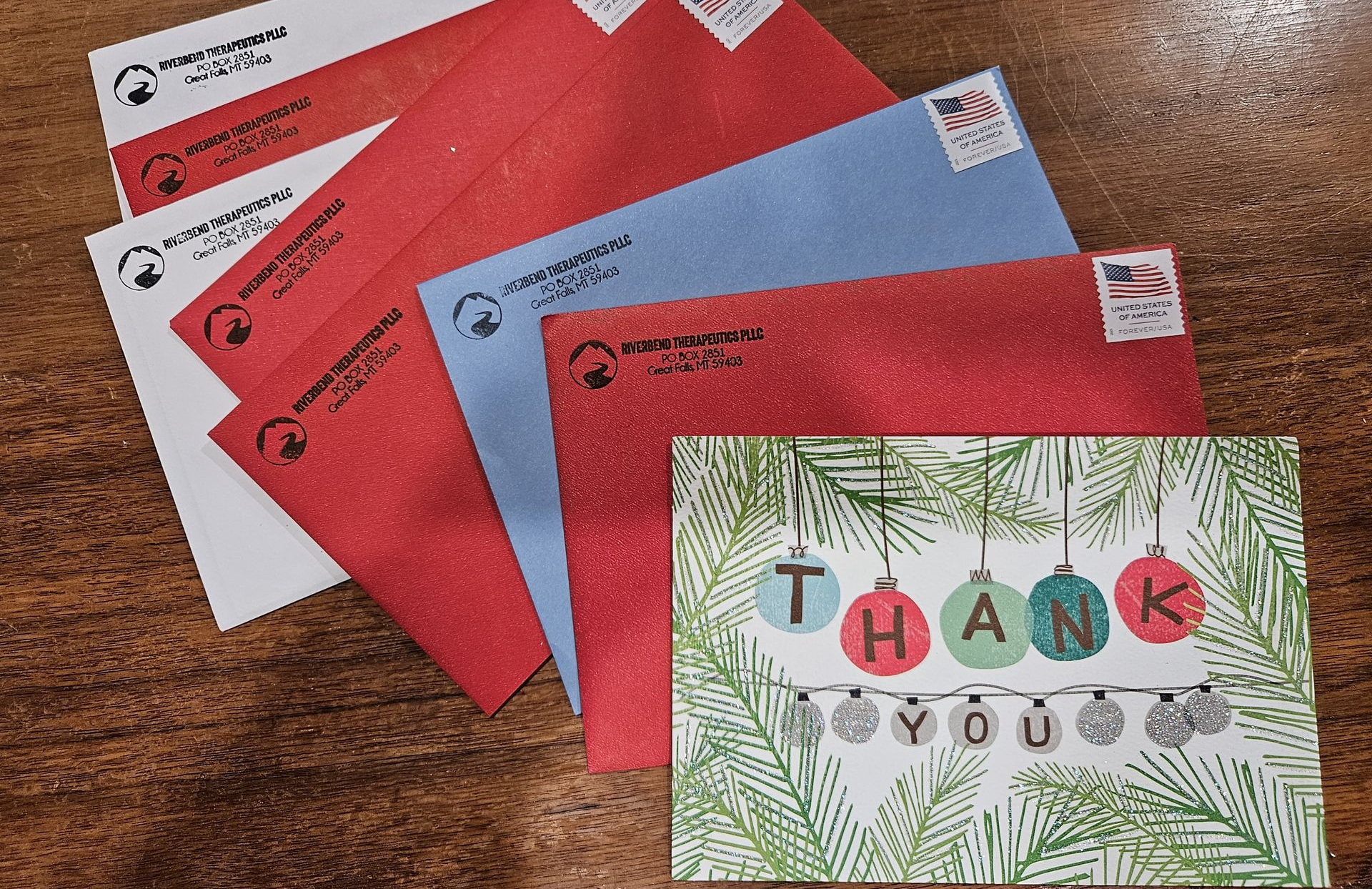
As the year winds down, I have a yearly business ritual I return to every single December.


I sit at my table or my desk with a stack of holiday cards and I slowly, intentionally write notes to the people who helped carry me through the year—the ones who sent referrals, spoke my name in rooms I wasn’t in, offered encouragement when things felt shaky, or simply believed in me when I was building something that mattered deeply to my heart (even if I didn’t know how much it mattered.)


It’s one of my favorite parts of the year. This year it was something that kept getting moved to the bottom of the TO-DO list and when I finally do it after the kids went to bed (a few days after Christmas) I was so sad I waited so long because the words flowed so naturally. Seeing the stack of Christmas cards warmed my heart in the way it does every year.


Not because it’s productive in the traditional sense.
Not because it checks something off a list.
But because it grounds me in why I do what I do.


Reflection Before Resolution

Writing those cards does something powerful. It forces me to pause and look honestly at where I am—and how I got here.


I’m reminded that I am not self-made.
That my work, my practice, my growth didn’t happen in isolation.
That there are
real people behind every opportunity, every client, every step forward.


This year, I had the pleasure of writing cards to those that helped me grow my financial therapy practice. The enthusiasm that I have for this work was EVIDENT. Reminding me that there have been few times in my life where I truly have felt like I am doing what I was put on this Earth to do.... but being a financial therapist truly feels like that.


So.


I didn’t just write the cards—I sat with each name. I let myself really feel the support that showed up for me in 2025. I reflected on the conversations, the trust, the referrals, the moments where someone saw my passion and said, “Yes, I believe in this.”... "Yes, I believe in her."

And in doing that, something clicked.


This was the year I became the sturdy financial therapist I feel like today.


Not because I worked harder.
Not because I hustled more.
But because I leaned fully into what I value most.


Why This Matters (Financially, Too)

Connection and reciprocity are not just nice ideas to me—they are core values.

And when I honor them, everything shifts.

When I lead with gratitude, my nervous system settles.
When I acknowledge support, I feel resourced instead of alone.
When I practice reciprocity, abundance stops feeling theoretical and starts feeling lived.


What I received this year—professionally, financially, emotionally—came ten-fold when I stayed rooted in those values.

And this is where money comes in.


Values Are the Foundation of Financial Alignment

We often talk about preparing financially for a new year in terms of numbers:

  • Budgets
  • Goals
  • Savings
  • Plans

But real financial alignment doesn’t start with spreadsheets.
It starts with values.

When your financial decisions reflect what you deeply care about, money becomes less about restriction and more about expression.

For me, honoring connection looks like:

  • Investing time in relationships
  • Expressing gratitude openly
  • Building a practice rooted in trust and care


Financially, that means I’m willing to allocate money and energy toward things that strengthen those values—because they are the very things that sustain my work and my life.


The same is true for you.


Preparing for a Values-Aligned New Year

As you look ahead to the new year, I invite you to pause before you plan.

Ask yourself:

  • Who helped me become who I am this year?
  • What values showed up again and again in my life?
  • Where did I feel most grounded, most fulfilled, most like myself?
  • How did money support—or disconnect me from—those moments?


When you answer those questions honestly, your financial priorities often become much clearer.

Maybe it’s investing more in community.
Maybe it’s creating more margin in your life.
Maybe it’s setting boundaries around spending that no longer aligns.


There’s no one right answer—only your answer.


Money as a Relationship

Money, like relationships, responds to intention.

When we lead with fear or disconnection, it often mirrors that back to us.
When we lead with clarity, gratitude, and values, it tends to soften.


This year taught me that when I honor connection and reciprocity—when I truly live those values—money flows in ways that feel supportive instead of stressful.


That’s the kind of financial preparation I’m carrying into the new year.

Not perfection.
Not control.
But alignment.


And if you’re willing to start there too, you may be surprised by what unfolds.

Money, like relationships, responds to intention.


Intentionality in Financial Therapy  

If you would like to begin the new year off with intention and emotional clarity when it comes to your finances, I would love to have a conversation about how I can help guide that intentionality.


  • Individual Financial Therapy offers a private space to be able to talk about your specific money story and begin to rewrite that story to be one that aligns with the 2026 version of you!
  • Group Financial Therapy offers immediate de-shaming of the where you have gotten to where you are at with your relationship with money. Every group ends up with a very unique blend of personalities, but each group is a safe, kind, supportive place to talk about what is happening with your relationship with money. If you are interested you can fill out the Group Interest Form and let me know when would work for you best!


Happy New Year!

By Stacy Peterson October 28, 2025
Jury duty called this week!  The next round of Flourish: Women’s Financial Wellness Group on Tuesday, November 5th instead of this week.
By Stacy Peterson October 22, 2025
How Family Lessons and Early Experiences Influence the Way You Handle Money
By Stacy Peterson September 23, 2025
Picture this: you’re teaching someone how to make a ham sandwich. It’s simple, right? Grab some bread. Add the ham. Maybe cheese. Maybe mustard. Done. There’s no emotional baggage in sandwich-making. No shame about how your parents used to make sandwiches. No panic over whether you bought the “right” bread. No spiraling thoughts about whether people will judge you for preferring mustard over mayo. It’s just a sandwich. Now imagine if money felt that simple. For so many people, it doesn’t. Instead of reaching for the bread, financial decisions get tangled up with anxiety, fear, shame, or even paralysis. What could be as straightforward as “add cheese, if you like” becomes a swirl of self-doubt: What if I’m making the wrong choice? What if people think I’m irresponsible? What if I "go broke" and I won't make it out? What if I never figure this out? That’s the heart of financial anxiety —and it can keep you stuck. What Is Financial Anxiety? Financial anxiety isn’t just “worrying about money.” It’s the constant undercurrent of stress, avoidance, or dread that shows up when you’re faced with financial decisions. It’s not always about how much or how little you have—it’s about how you feel when you interact with money. Some common signs of financial anxiety include: Avoiding looking at your bank account Delaying important decisions, like paying bills or investing Feeling a tightness in your chest when money comes up in conversation Judging yourself harshly for past financial mistakes Believing you’re “bad” with money, even when you’re doing your best It’s like having a voice in your head that turns even the simplest money decisions into high-stakes dilemmas. That voice keeps you from moving forward, from building confidence, and from experiencing freedom with money. Why We Get Stuck Money is rarely just about dollars and cents. It’s about identity, security, and belonging. From a young age, we absorb messages about money— what it means, how it’s used, whether it’s safe to talk about, and what it says about our worth. Maybe you grew up hearing, “We can’t afford that.” Or perhaps you were told, “Money doesn’t grow on trees.” Maybe you saw conflict about money in your family or learned that silence was the safest approach. Over time, these messages become stories we carry into adulthood. They whisper in the background every time we swipe a debit card, sit down to make a budget, or think about asking for a raise. No wonder financial decisions can feel so heavy. The Ham Sandwich Test Here’s a little thought experiment: What if financial decisions carried the same emotional weight as sandwich-making? Imagine if you could walk into a store or open the Amazon app, decide on what you need, and move on without the flood of second-guessing. Imagine if you could look at your bank account the way you look at your fridge—just checking what’s inside, not attaching meaning to whether it’s “good” or “bad.” When we strip away the shame and fear, money decisions can become clearer and less overwhelming. Just like a sandwich, you can choose what you like, make adjustments as you go, and know there’s no one “perfect” way to do it. How Financial Anxiety Keeps You From Moving Forward The real challenge is that financial anxiety doesn’t just feel uncomfortable—it can keep you from making progress. Avoidance leads to missed opportunities. Ignoring your statements or delaying decisions can mean late fees, lost savings, or stalled growth. Shame fuels procrastination. When you’re stuck in a cycle of self-criticism, it’s harder to take the small steps that build confidence. Fear limits your options. Worrying about making the “wrong” choice can keep you from making any choice at all. And just like hunger doesn’t go away because you’re too anxious to make a sandwich, financial needs don’t disappear because you avoid them. The longer you wait, the bigger the hunger—or in this case, the stress—grows. Building Safety and Confidence So, how do you start untangling financial anxiety and building a sense of calm around money ? Here are a few steps: Create a Safe Environment Just as you feel more at ease making a sandwich in your own kitchen, you’ll feel more confident with money when you create a sense of safety. That might mean working with a trusted financial professional, setting boundaries around unhelpful money conversations, or starting in small, private steps. Practice Self-Compassion Remind yourself that money anxiety is common. You’re not “bad” with money—you’re human. Talking to yourself with kindness instead of criticism softens the emotional weight. Start Small Instead of overhauling everything at once, focus on small, doable actions: calming your body before hitting the “Buy Now” button, checking your balance, notice any emotional dysregulation before making choices, setting up one automatic payment, or making a list of expenses. Each step builds confidence, just like adding one sandwich ingredient at a time. Challenge Old Stories Notice the beliefs you’ve carried from the past. Notice if they are beginning to drive your money decisions today. Ask yourself, Is this story still serving me? You have the power to rewrite your money narrative. Seek Support Financial therapy can provide the warmth, safety, and tools needed to explore your relationship with money and build confidence in your decisions. Sometimes having someone sit beside you makes the “sandwich-making” a whole lot easier. Reframing Money Conversations The goal isn’t to make money feel insignificant —financial conversations are important . But we can make it feel more approachable. Imagine what would shift if talking about budgeting felt like talking about your lunch plans. Imagine if saving for the future carried as much emotional weight as deciding whether you want Cheddar or Swiss. When money conversations become lighter, we can approach them with curiosity, flexibility, and even creativity. We can stop avoiding, start deciding, and move forward with confidence. Final Thoughts Financial anxiety can make even the smallest decisions feel impossible, keeping you stuck in cycles of avoidance and shame. But just like making a sandwich, money doesn’t have to be complicated or emotionally overwhelming. When you create a sense of safety, practice compassion, and take small, intentional steps, you can move from anxiety to confidence. You can rewrite your money story. And maybe one day, you’ll find yourself smiling as you think: If I can make a ham sandwich, I can make this financial decision, too
By Stacy Peterson August 7, 2025
How Sally’s Story Might Help You Understand Your Own.
By Stacy Peterson June 25, 2025
When I applied to be part of the 56Strong Women’s Mentorship Program, I knew I was signing up for something that had the potential to support me — but I didn’t know just how transformative it would be for me personally and for my financial therapy practice. 
By Stacy Peterson June 24, 2025
As I write this it has been 10 days, 12 hours, and 30 minutes since I returned home from the 2025 Financial Therapy Association Annual Conference (FTAC25) in Athens, Georgia—a powerful gathering of minds from the financial and mental health worlds. I’ve wanted to attend for years after hearing mentors describe how special it is. They often mentioned how inclusive and warm the community felt, and based on the financial therapists I’ve met along the way, I believed them. I had met many members of the FTA and had proof. What I didn’t expect was the depth of that warmth—an overwhelming kindness and love from people I’d only just met.
By Stacy Peterson June 3, 2025
You Asked. We Listened. We’re making a small shift to better fit your day — the morning group on Tuesdays will now meet at 9:00 a.m. MT instead of 11:00 a.m. MT! Same supportive community, same powerful conversations — just a fresh, earlier start to your day. 
By Stacy Peterson May 19, 2025
Our Financial Anxieties, Thoughts, Feelings, and Behaviors.... Have you thought about them lately?
By Stacy Peterson May 4, 2025
Schedule a No-Cost Video Consultation to Join a Group TODAY! 
By Stacy Peterson March 21, 2025
2 Great Groups to Join! Beginning March 26, 2025 and April 1,2025.
More Posts